
Guide · Groundwater
HWRA groundwater permission for industries in Haryana: a practical guide
If your factory, warehouse or campus draws water from a borewell in Haryana, the Haryana Water Resources Authority (HWRA) is part of the picture. This guide explains, in plain words, who usually needs permission or registration, what HWRA asks for on the ground, and how to prepare so the borewell and the paperwork move together instead of one holding up the other.
Last reviewed · Saini Water Infra
Rules change; we confirm what applies to your site against the current notifications before work starts.
Who it applies to
Industrial, infrastructure and mining users of groundwater in Haryana generally need permission or registration from HWRA. Small users may only need to register. That covers most of the sites we work on: factories and plants, warehouses and logistics parks, and larger institutional campuses that run their own borewell.
What applies to a particular site is not one rule for everyone. It depends on where the site is, because rules differ from block to block, and on how much water the site draws. Two plants on the same road can end up in different positions if one draws far more than the other.
Outside Haryana the picture changes. In Delhi NCR and other places, the Central Ground Water Authority (CGWA) applies where it has jurisdiction. If you have sites in more than one state, it is worth checking each one separately rather than assuming the same paperwork covers all of them.
What HWRA asks for on the ground
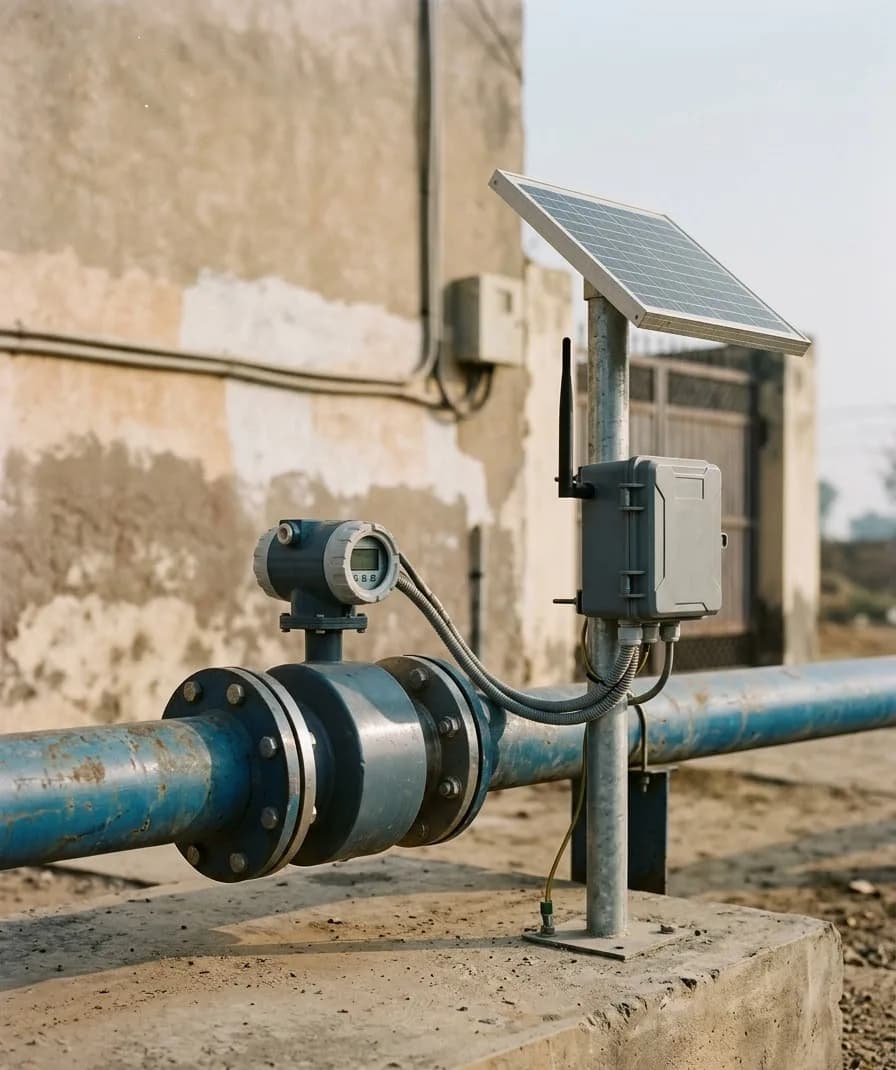
Permission is not only a file. HWRA has asked for flow meters on borewells that send readings to its portal, so the amount of water a site draws is measured continuously rather than estimated. In practice that means an electromagnetic flow meter on the borewell delivery line, with telemetry that reports the readings.
Where they are required, piezometers with digital water level recorders (DWLR) are part of the same picture. A piezometer is a small monitoring well; the recorder logs the water level in it so the effect of pumping on the aquifer can be seen over time.
The practical point for a site manager is simple: metering and monitoring are part of the borewell, not an extra to add later. It is cheaper and quicker to plan the meter, the telemetry and any piezometer at the design stage than to retrofit them after an inspection.
What to prepare before you apply
Most delays come from missing basics rather than difficult questions. Before an application or registration, it helps to have the following ready in one place:
- The site location and plot details, including which block it falls in.
- The daily water demand: process water, utility water and domestic use, plus the fire water tank that the borewell will refill.
- Details of any existing borewells on the site, and whether they will stay in use.
- A survey of the ground. We work with a hydrogeologist partner for the groundwater survey where one is needed.
- Site drawings showing where the borewell, the meter and any piezometer will go.
Common mistakes we see
The same few problems come up again and again. Drilling first and thinking about permission later is the biggest one, because it can leave a working borewell that the site cannot rely on. Sizing the bore without a clear demand figure is another: the bore ends up too small for the plant, or the paperwork does not match what is actually drawn.
On the metering side, the usual gaps are a meter fitted without telemetry, a piezometer missing where one was required, and readings that nobody is watching. Finally, records get scattered across vendors: the bore log with the driller, the meter details with the supplier and the permission papers with a consultant. When an inspection or a renewal comes round, nobody has the full file.
How Saini Water Infra helps
We treat the borewell and its compliance as one job. Every bore starts with a site survey, and we size it to the site's daily demand. Alongside the drilling, we support the HWRA or CGWA permission paperwork, supply and install electromagnetic flow meters with telemetry, and fit piezometers with digital water level recorders where they are required.
At handover you get the bore log, the yield test, the meter details and the permission papers in one file, and we support the site through renewal. If the same site needs a fire water tank, pumps or a hydrant system, the borewell is planned as its refill source from the start.